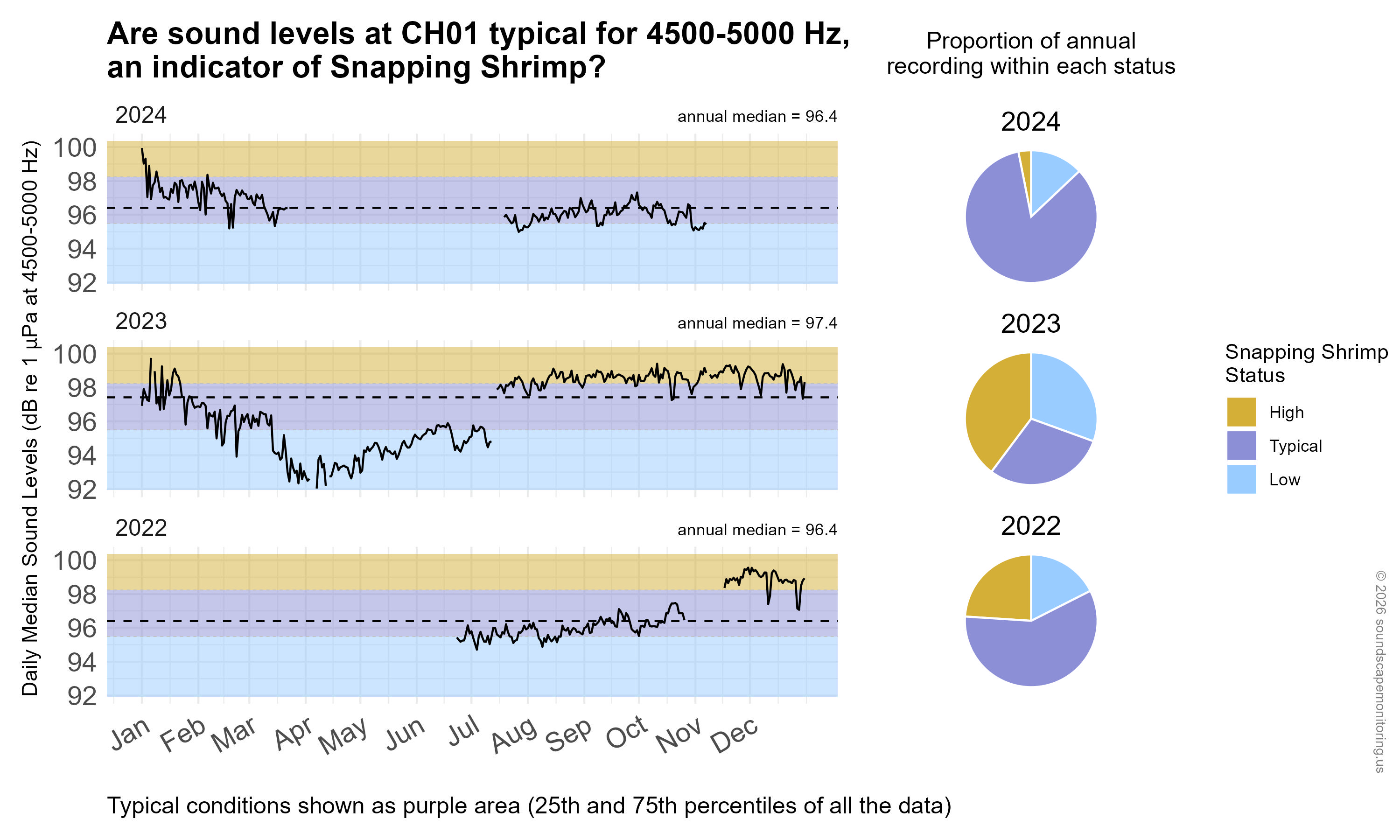
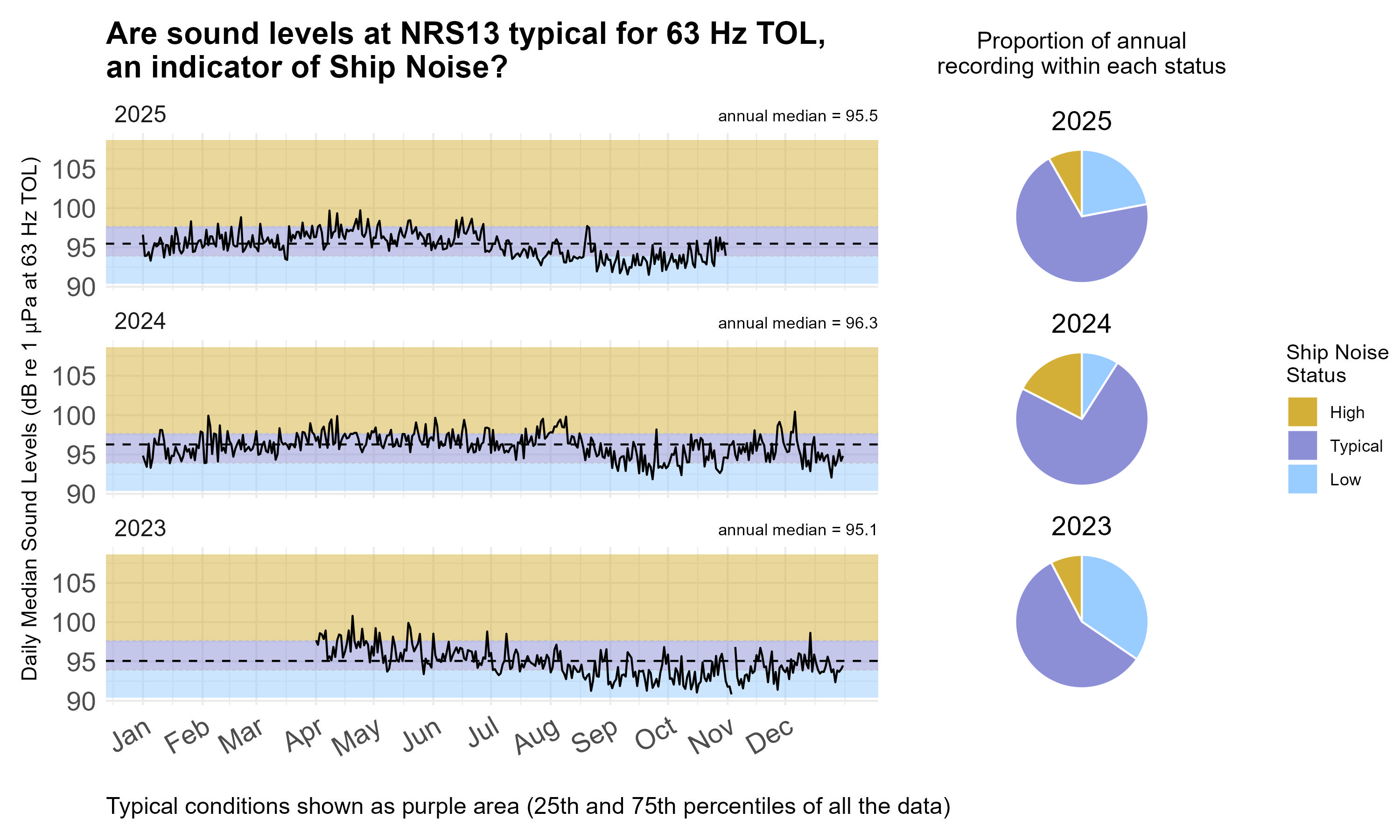
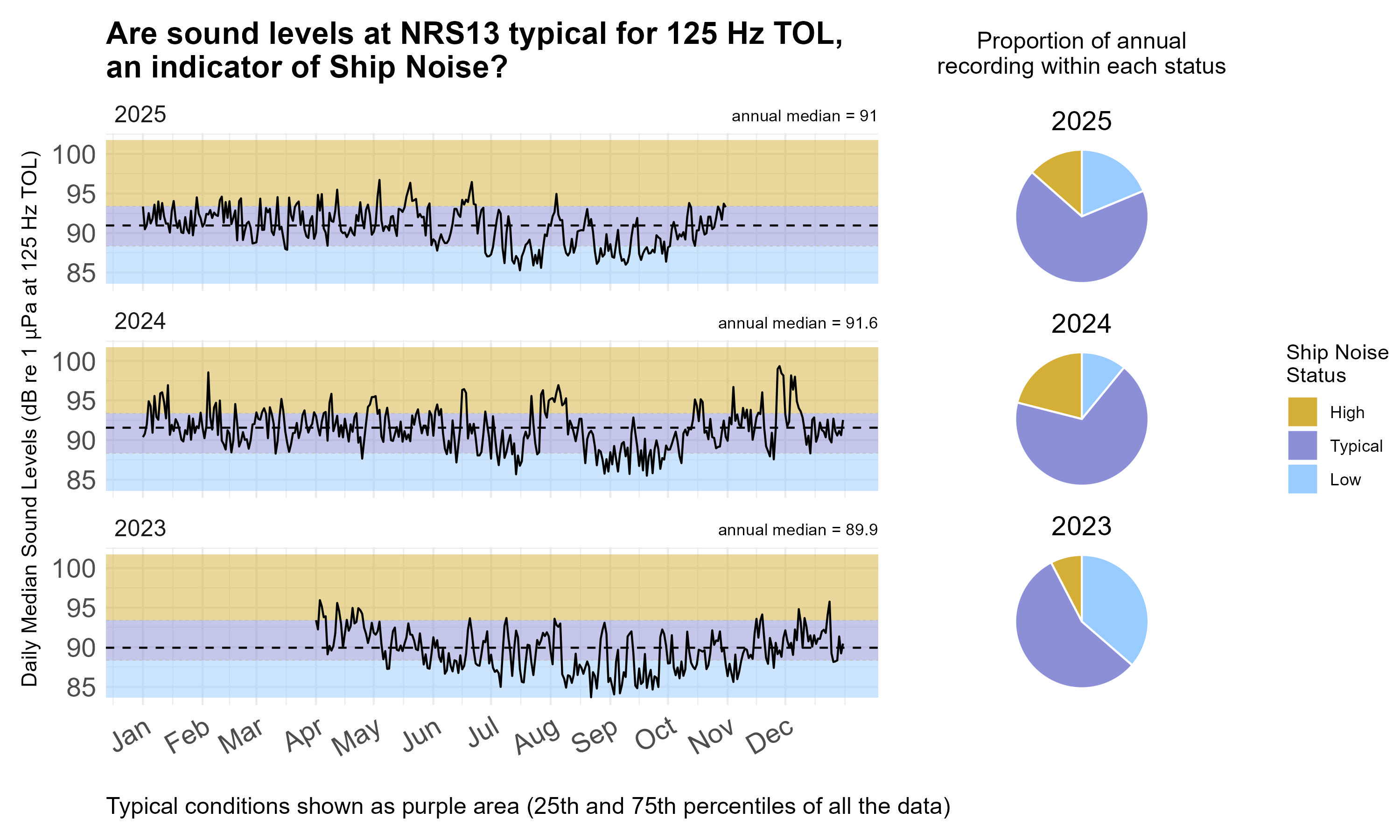
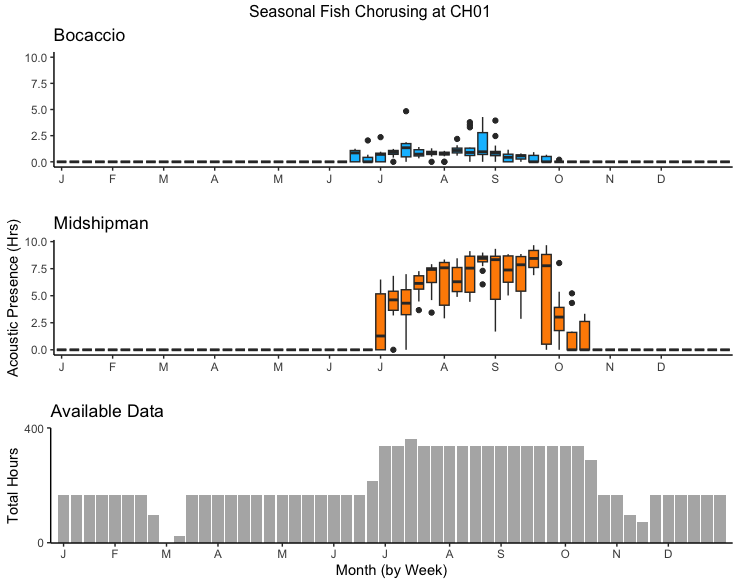
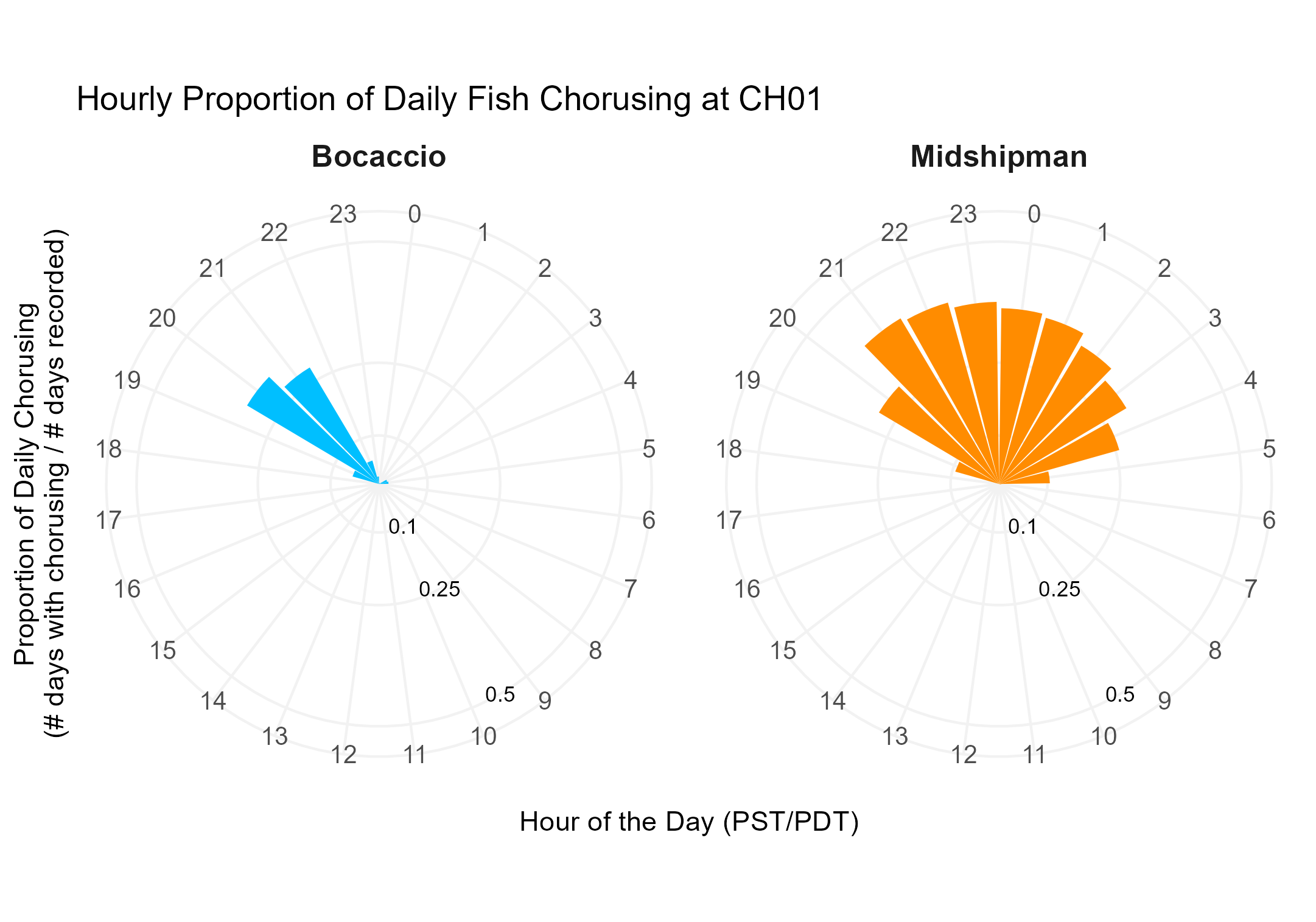
The Chumash Heritage National Marine Sanctuary (CHNMS) was established in 2024 and is focused on building a holistic, long-term, multi-knowledge based monitoring framework that informs awareness and enhanced understanding of the ecosystem's health through relationality. Sound monitoring is a vital, non-invasive tool within a broader suite of instrumentation required for a multi-dimensional understanding of the complex relationships between biodiversity, humans, and shifting oceanographic conditions in this region of the central California coast proposed for increased human activities, such as offshore wind development, in coming years.
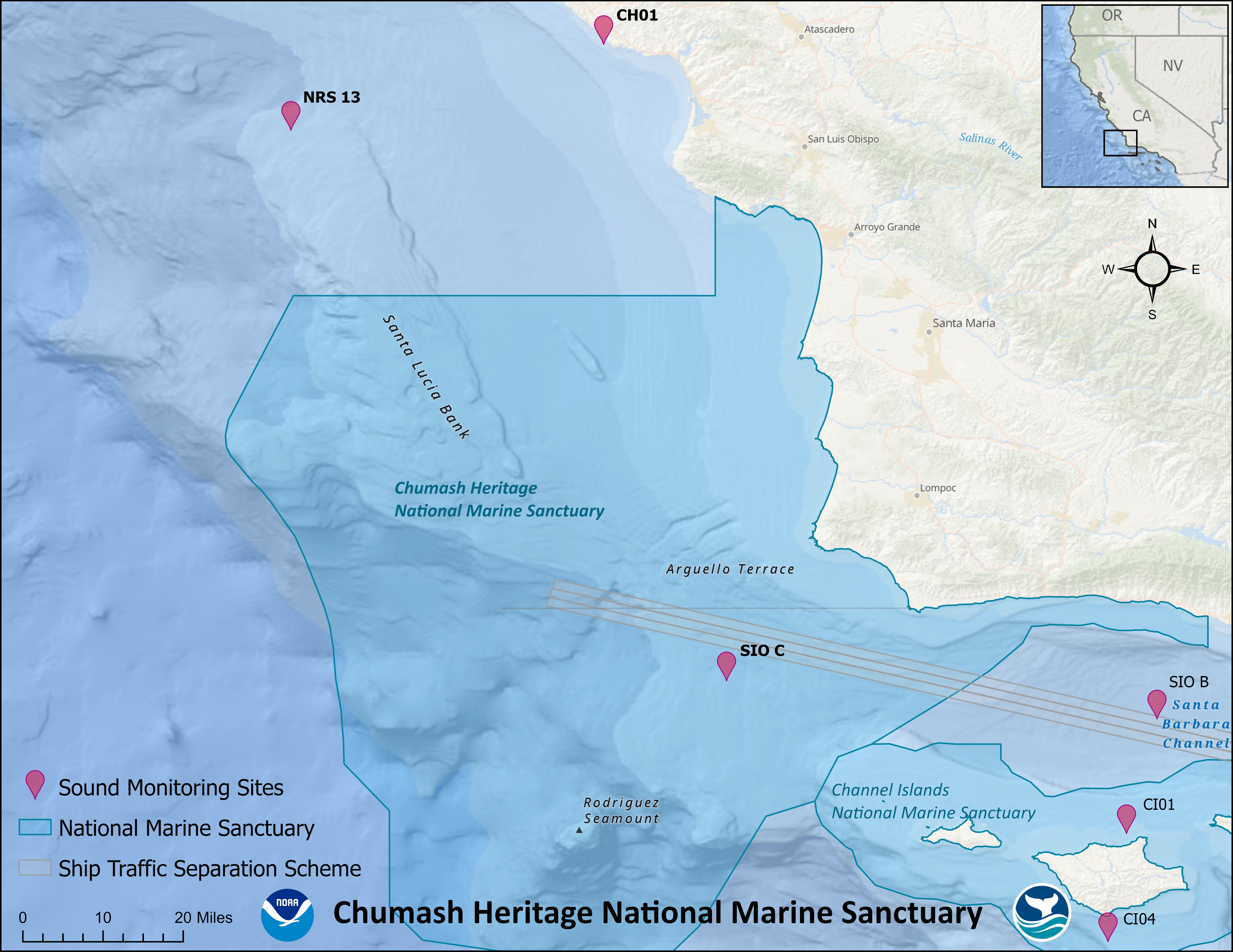
To characterize baseline understanding of acoustic conditions ahead of sanctuary designation, the CH-01 listening station was established off Point Estero, now situated between the boundaries of MBNMS and CHNMS, along with a Noise Reference Station (NRS-13) established in 2023 northwest of CHNMS's western boundary. Scripps Institution of Oceanography's Site C has been recording inside CHNMS boundaries off Point Conception since 2008 as part of the California Current Long-term Ecological Research Project and provides a rich time-series of marine mammal acoustic detections, including beaked whales, as well as vessel activity.
To characterize baseline understanding of acoustic conditions ahead of sanctuary designation, the CH-01 listening station was established off Point Estero, now situated between the boundaries of MBNMS and CHNMS, along with a Noise Reference Station (NRS-13) established in 2023 northwest of CHNMS's western boundary. Scripps Institution of Oceanography's Site C has been recording inside CHNMS boundaries off Point Conception since 2008 as part of the California Current Long-term Ecological Research Project and provides a rich time-series of marine mammal acoustic detections, including beaked whales, as well as vessel activity.