Florida Keys National Marine Sanctuary (FKNMS) protects a multitude of marine habitats that support high biodiversity found in its mangrove forests, seagrass meadows, open ocean, and famously the only living coral barrier reef in the continental United States. Visitor use of sanctuary water is widespread and includes many activities, from recreational diving and snorkeling to recreational fishing. Targeted sound monitoring has historically focused on understanding biological and human activity within the context of seasonal conditions as well as soundscape responses to coral stressors and restoration efforts. Multiple sites in the sanctuary were part of the Sanctuary Soundscape Monitoring Project, a 5-year (2018-2022) system-wide monitoring project to understand the diversity of sounds in sanctuary waters.
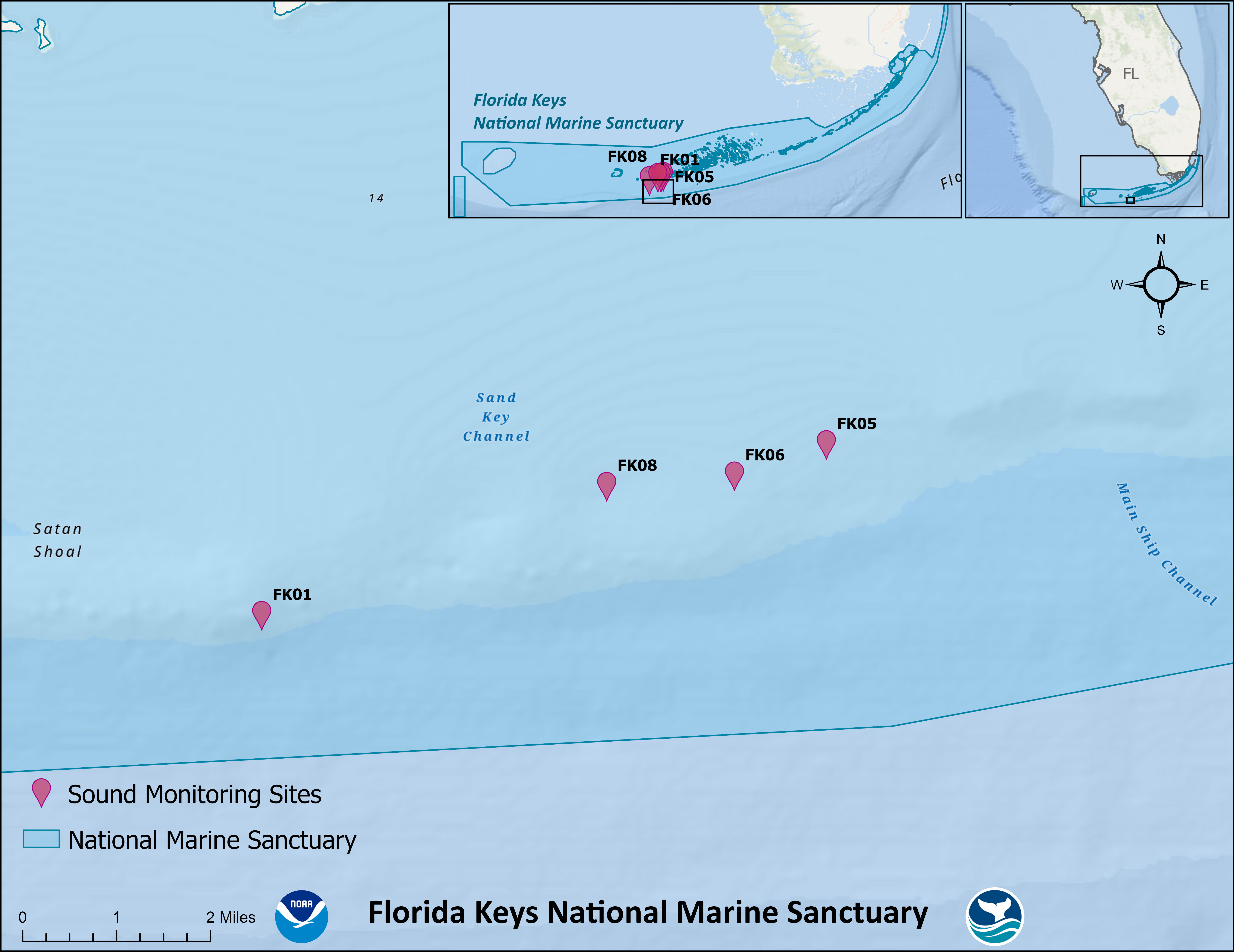
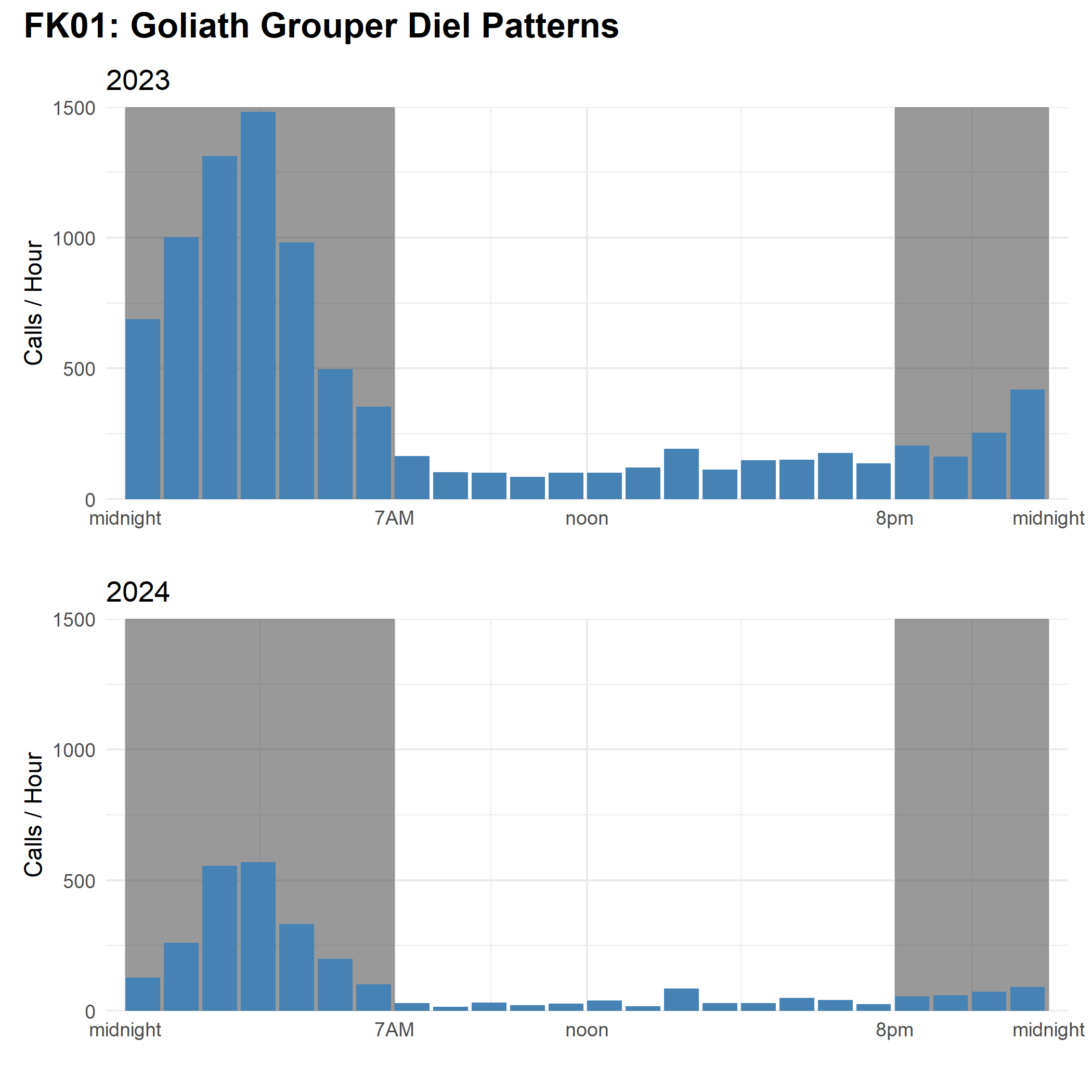
Current ONMS ocean sound monitoring and analysis is maintained at four sites (FK01, FK05, FK06, and FK08) within the coral reef tract of the Lower Keys. Collectively, these sites are being monitored for sounds produced by spawning fishes, such as groupers, snapping shrimp, and vessels to further understand the biological productivity of reef inhabitants and stakeholder use of these unique reefs. The comparison of sound with additional data types, such as temperature data and restoration activities, is also being explored to examine how soundscapes respond to environmental and habitat conditions in the context of different spatial and temporal management strategies.
To see historical monitoring sites that are no longer active, please visit Sanctuary Soundscape Project data portal.
Current ONMS ocean sound monitoring and analysis is maintained at four sites (FK01, FK05, FK06, and FK08) within the coral reef tract of the Lower Keys. Collectively, these sites are being monitored for sounds produced by spawning fishes, such as groupers, snapping shrimp, and vessels to further understand the biological productivity of reef inhabitants and stakeholder use of these unique reefs. The comparison of sound with additional data types, such as temperature data and restoration activities, is also being explored to examine how soundscapes respond to environmental and habitat conditions in the context of different spatial and temporal management strategies.
To see historical monitoring sites that are no longer active, please visit Sanctuary Soundscape Project data portal.