Papahānaumokuākea National Marine Sanctuary Soundscape Report

Published

April 16, 2026

Ocean Sound Monitoring

Papahānaumokuākea National Marine Sanctuary (PNMS) is the largest sanctuary in the National Marine Sanctuary System, encompassing 582,570 square miles of Pacific Ocean waters in Hawaiʻi, providing protection to nationally significant natural, cultural, and historical resources. Due to its size and remote location, Papahānaumokuākea has a long history of ocean sound monitoring, with efforts focused on marine mammal presence, shifts in biodiversity, ecosystem variability, and tracking both permitted and unpermitted vessel activity. It was also part of the Sanctuary Soundscape Monitoring Project that began in 2018.

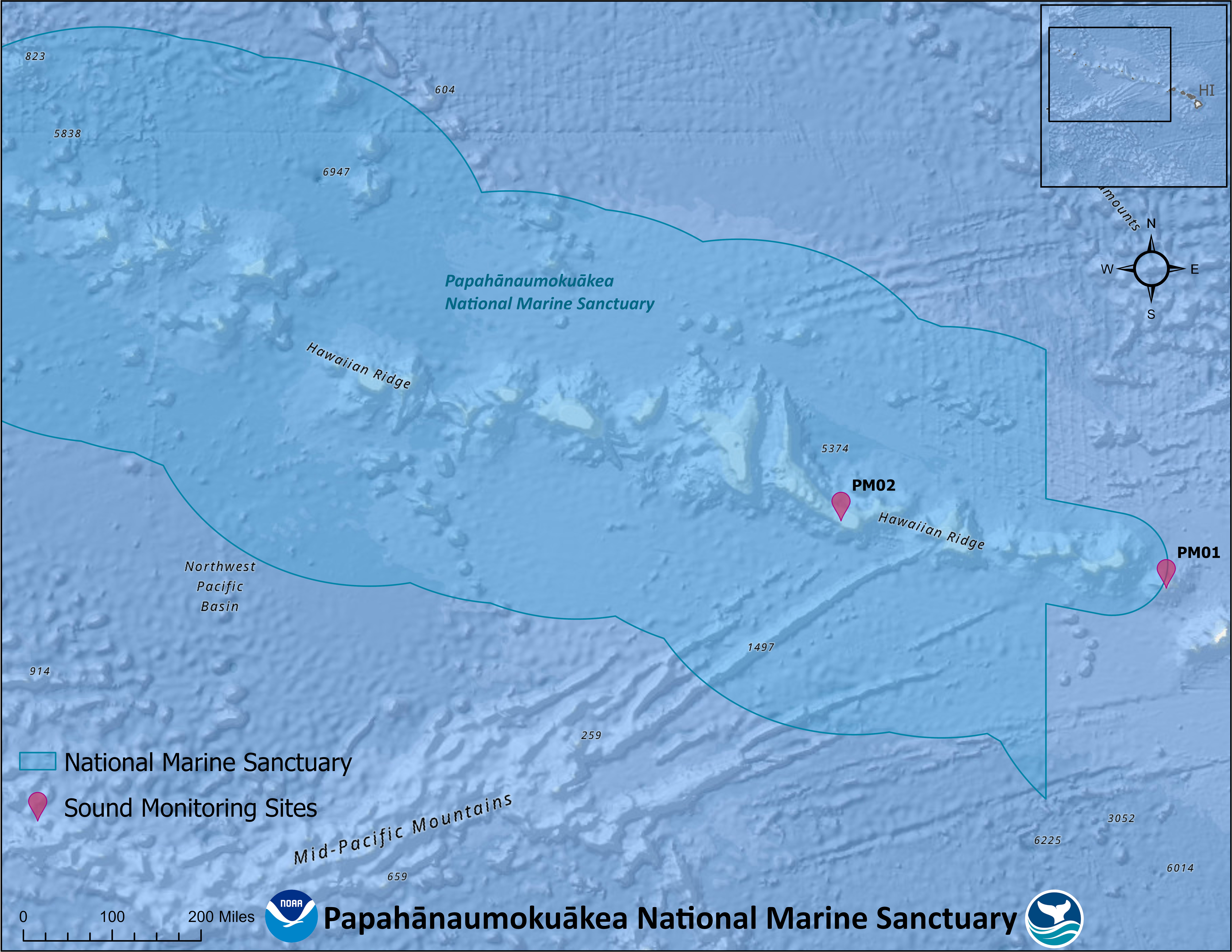
Current ONMS ocean sound monitoring and analysis is maintained at two sites (PM01, PM02) within PNMS. Both sites are dominated by biological activity, including sounds from several species of whales, dolphins, fish, and Hawaiian monk seals. Reef-associated sounds, such as snapping shrimp and herbivorous fish grazing on hard substrates, provide additional indicators of reef health. Anthropogenic sounds, such as vessel noise and military sonar, are occasionally recorded but occur at relatively low levels.

To see historical monitoring sites that are no longer active, please visit Sanctuary Soundscape Project data portal.

Summary of monitoring sites

Long-term Monitoring Site Primary Monitoring Purpose Oceanographic Setting Depth (m) Sampling Rate (kHz) Known Biological Sounds Vessel Traffic Setting Latitude Longitude StartDate Total Recording Days
PM01 Middle Bank is a remote offshore bank important for marine mammals and fish, with relatively high humpback whale densities. Ongoing monitoring focuses on long-term trends in whale migration and anthropogenic activity. offshore-shallow, remote bank at the eastern end of the sanctuary's boundary ~65 48 Humpbacks (Dec-May), minke whales (Oct-May), other baleen whale species, fish, odontocetes, snapping shrimp, and Hawaiian monk seals Limited vessel noise and naval activities are detected in this area but not well understood 22.66 -161.04 Sept 2022 545
PM02 A remote offshore site within Lalo (French Frigate Shoals) with relatively high humpback whale presence and a historical acoustic monitoring site. Ongoing monitoring supports long-term comparisons of soundscape conditions and whale chorusing, and tracks trends in whale migration and reef health. offshore-shallow, remote bank located at Lalo (French Frigate Shoals) ~35 48 Humpbacks (Dec-May), minke whales (Oct-May), other baleen whale species, fish, odontocetes, and snapping shrimp Limited vessel noise acoustically detected 23.76 -166.33 Sept 2022 556

Ocean Sound Conditions

Soundscapes vary across years, seasons, and even within a day. Differences are driven by shifts in wind and weather patterns, migration and behavior of animals, and patterns in human activities. We track how sound levels change in different frequencies using standardized soundscape metrics to understand these changes. Seasonal and annual percentiles of all the data, a measurement of data spread with the middle 50% falling between the 25th and 75th percentile, are used to define typical conditions.

What are the seasonal patterns across frequencies?

Season is often a main driver of soundscape differences: wind and weather patterns shift, species migrate or change behavior, and humans change their marine activities. As shown on the graphic(s) below, we can visualize the differences by looking at the variation across frequency (pitch of the sound in Hertz) shown on the x-axis and intensity (how loud the sound is in decibels) shown on the y-axis. The colored lines represent regionally-specific oceanographic seasons, vertical shaded bars are the frequency ranges that a sound source of interest can be heard, and the black lines bound the expected range of modeled sound intensity when only wind noise is present.
Here are some questions to consider when viewing the graph(s) below:
(1) Which season has the highest sound levels?
(2) Are there peaks in the sound levels for any of the sounds of interest?
(3) Are the low-frequency sound levels outside the expected range for wind noise?

Line graph of seasonal median sound levels (sound intensity measured by mean-square pressure in microPascal per Hertz) across a range of frequencies (~10 to ~24,000 hertz) for all data at a given monitoring site, with annual recording effort represented by a bar graph underneath. Each season is a different colored line. Modeled ambient sound levels from wind are shown as solid black lines. Frequency bands indicative of a sound source of interest are highlighted in semi-transparent gray and labeled; peak frequencies of interest for some fish species are labeled with vertical dashed lines and labeled by species.
Seasonal median sound levels (sound intensity measured by mean-square pressure in microPascal per Hertz) across a range of frequencies (~10 to ~24,000 hertz) at a given monitoring site, with annual recording effort represented by a bar graph underneath. Each season is a different colored line. Solid black lines show modeled ambient sound levels from wind at 1 m/s (lower line) and 22.6 m/s (upper line) based on hydrophone depth. Frequency bands indicative of a biological or anthropogenic sound source of interest are highlighted in semi-transparent gray and labeled; peak frequency for dominant fish species are labeled with vertical dashed lines. Credit: Megan McKenna and Emma Beretta/CIRES and NOAA

Processing raw audio files to calibrated sound levels (i.e., soundscape metrics) involves multiple steps to get a specified time frequency data product. All soundscape metrics visualized in the soundscape inventory reports are averaged from hybrid millidecade sound levels, calculated using either MANTA or PyPAM software packages. Both softwares calculate mean PSD (dB re 1 µPa^2/Hz) per minute in 1-Hz wide bins using Welch’s method with a Hann window, FFT length equal to the sample rate, and 50% overlap. Following calibration based upon instrument specific sensitivities, PSD values per minute were further processed in hybrid millidecade spectral densities, which are an efficient means of storing PSD spectra from high sample rate audio files using 1-Hz values up to 435 Hz, and then millidecade wide PSD values up to one half of the sample rate (Martin et al. 2021).

PAMscapes was used to calculate hourly median hybrid milli-decade bands (loadSoundscapeData(ncFile, keepQuals = c(1,2)) and binSoundscapeData(hmddata, bin = "1hour", method = c("median")). The hourly data were then matched with an estimate of wind speed at that location using matchGFS in PAMscapes (Global Forecast System (GFS) weather model). Long-term condition plots in these reports were generated by averaging the hourly median hybrid millidecade results within different time constraints (i.e. annual, seasonal) and percentiles (e.g., 25% and 75%) for each hybrid millidecade frequency band.

How are ocean sound conditions changing across years?

We can track changes in ocean soundscape conditions and its contributors by comparing annual sound levels. Efforts to reduce noise impacts to marine animals are underway on local to global scales. Strategies can include avoidance of times and areas when sensitive species are present to reduce vulnerability (e.g., a shipping lane), changing the operation of a potentially hazardous noise source (e.g., by slowing and therefore quieting vessels) or through the design and use of alternative, quieter sources (e.g., new, quieter ship design and/or technologies). The effectiveness of these approaches, and the scales over which they are effective, can be tracked through comprehensive monitoring efforts. A focused analysis is often necessary to tease apart the multiple drivers of ocean sound levels, however, annual summaries provide initial insights to overall patterns.
Here are some questions to consider when viewing the graph(s) below:
(1) Are levels lower in the most recent year of monitoring in any of the frequencies of interest?
(2) Are there peaks in the sound levels for any of the sounds of interest? Do they differ across years?

Line graph of annual median sound levels (sound intensity measured by mean-square pressure in microPascal per Hertz) across a range of frequencies (~10 to ~24,000 hertz) for all data at a given monitoring site, with annual recording effort represented by a bar graph underneath. Each year is a different blue line, getting darker for every additional year of data. Modeled ambient sound levels from wind are shown as solid black lines. Frequency bands indicative of a sound source of interest are highlighted in semi-transparent gray and labeled; peak frequencies of interest for some fish species are labeled with vertical dashed lines and labeled by species.
Annual median sound levels (sound intensity measured by mean-square pressure in microPascal per Hertz) across a range of frequencies (~10 to ~24,000 hertz) at a given monitoring site, with annual recording effort represented by a bar graph underneath. Each year is a different blue line, getting darker for every additional year of data. Solid black lines show modeled ambient sound levels from wind at 1 m/s (lower line) and 22.6 m/s (upper line) based on hydrophone depth. Frequency bands indicative of a biological or anthropogenic sound source of interest are highlighted in semi-transparent gray and labeled; peak frequency for dominant fish species are labeled with vertical dashed lines. Credit: Megan McKenna and Emma Beretta/CIRES and NOAA

Is the intensity (loudness) of sound sources of interest within typical range?

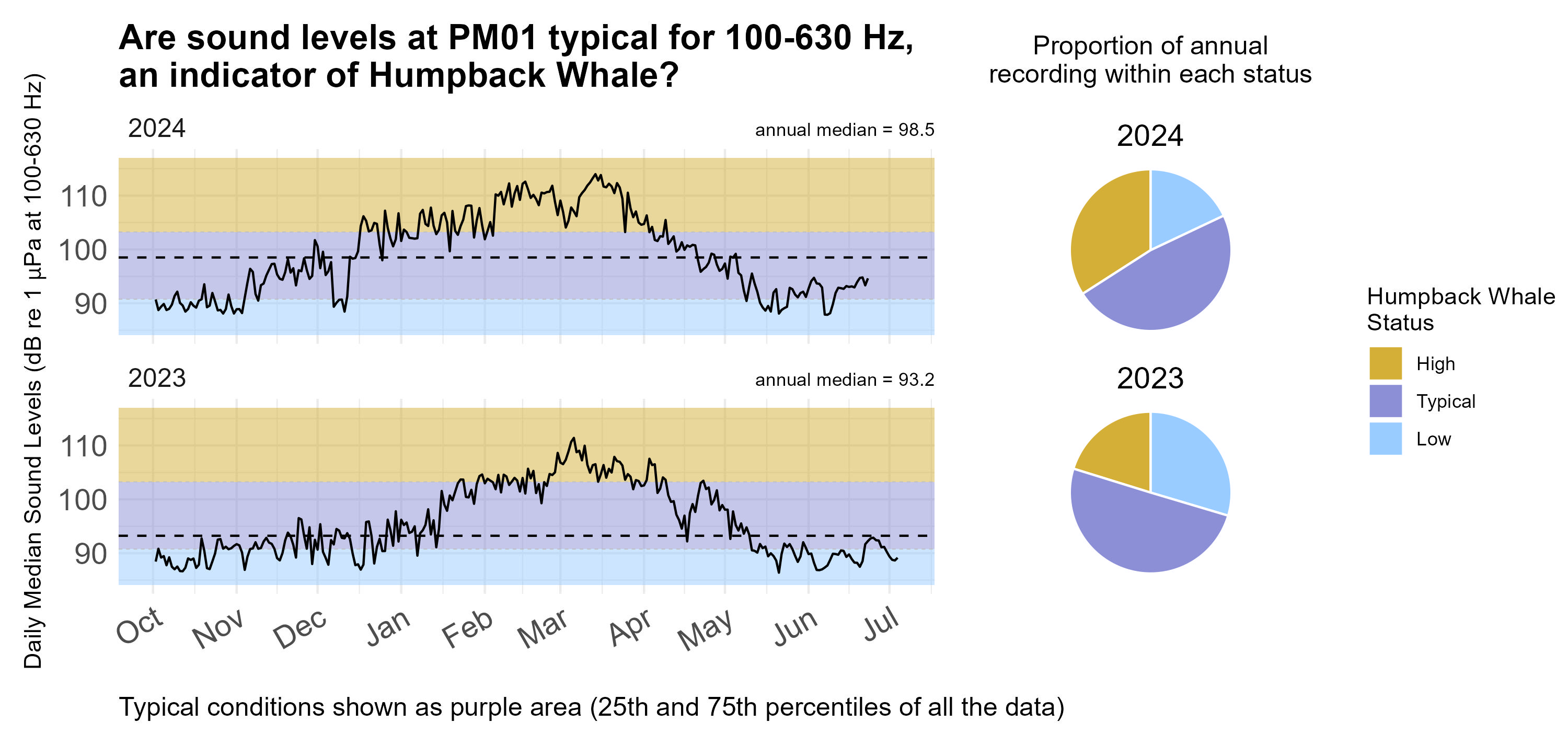
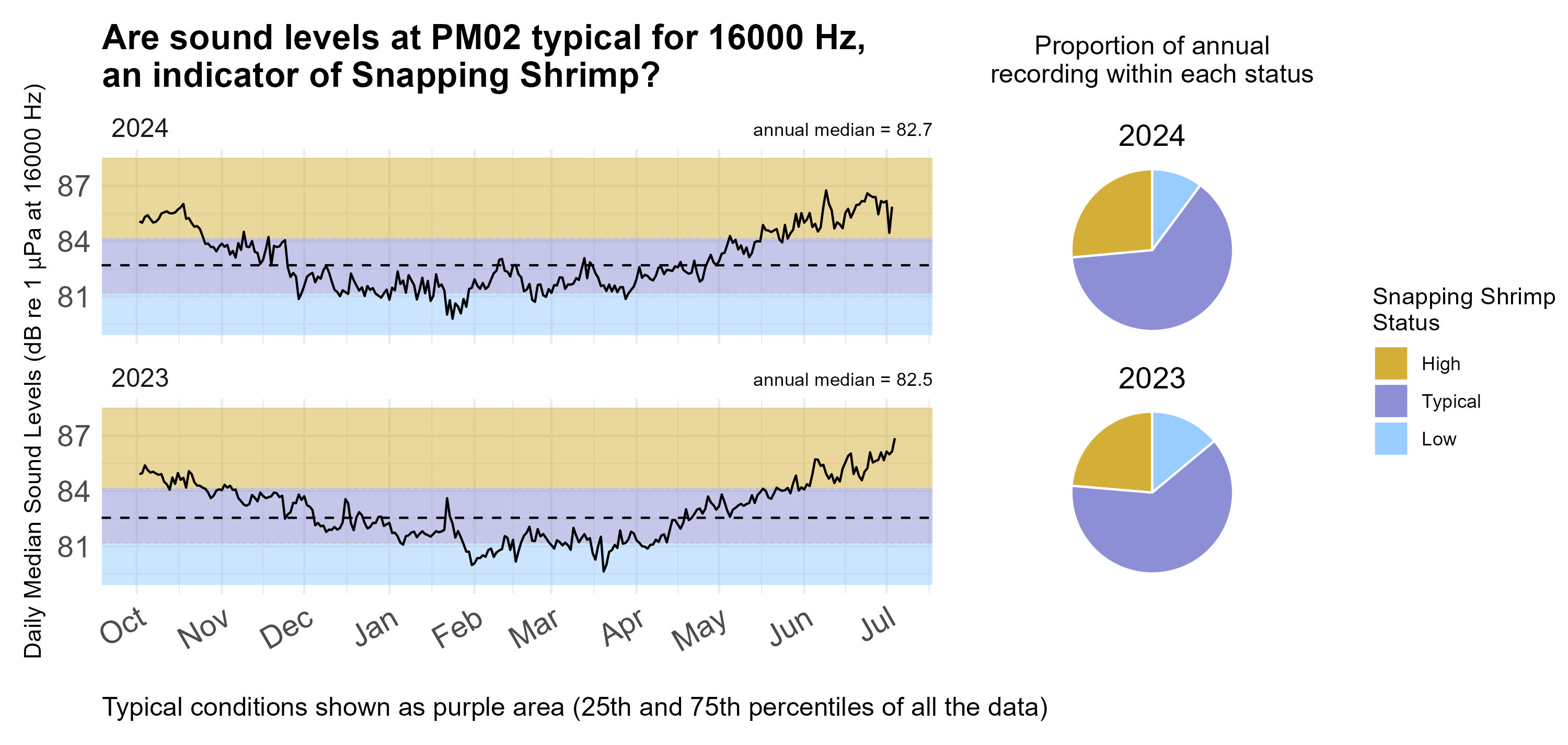
In some soundscapes, we can use specific frequencies as indicators for the presence of a source of interest (e.g. species presence and behavior). Monitoring sites are often chosen because a known source that we want to track is present and we can track this dominant sound energy contributor using their specific frequency or frequency range. For example, seasonal migration of humpback whales to Hawaiian Islands results in soundscapes dominated by their calling between 50 and 630 Hz. At sites near commercial shipping lanes, 63 and 125 Hz one-third octave level (TOL) are used as an indicator for ship noise (Haver et al. 2021)). At sites where snapping shrimp are present, 4,000 - 18,000 Hz can be used as an indicator of their sounds. Only frequencies that have been identified as reliable for tracking a source of interest are shown below.

Time series plot of daily median sound levels (sound intensity measured by mean-square pressure in microPascal per Hertz) for a specific frequency band(s) of interest at this site, separated by year. Background color shading (blue, purple, gold) indicates low (<25th percentile), typical (25-75th percentile), and high sound levels (>75th percentile) across the entire dataset at this frequency band(s) for comparability with annual medians, marked with horizontal black dashed lines. Pie charts on the right hand side of the graphic show the proportion of daily median sound levels that fell within each category for each year, following the same color-coding and percentile bins.


Time series plot of daily median sound levels (sound intensity measured by mean-square pressure in microPascal per Hertz) for a specific frequency band(s) of interest at this site, separated by year. Background color shading (blue, purple, gold) indicates low (<25th percentile), typical (25-75th percentile), and high sound levels (>75th percentile) across the entire dataset at this frequency band(s) for comparability with annual medians, marked with horizontal black dashed lines. Pie charts on the right hand side of the graphic show the proportion of daily median sound levels that fell within each category for each year, following the same color-coding and percentile bins.
Time series plot of daily median sound levels (sound intensity measured by mean-square pressure in microPascal per Hertz) for a specific frequency band(s) of interest at this site, separated by year. Background color shading (blue, purple, gold) indicates low (<25th percentile), typical (25-75th percentile), and high sound levels (>75th percentile) across this monitoring site's entire dataset at this frequency band(s) for comparability with annual medians, marked with horizontal black dashed lines. Pie charts on the right hand side of the graphic show the proportion of daily median sound levels that fell within each category for each year, following the same color-coding and percentile bins. Credit: Megan McKenna and Emma Beretta/CIRES and NOAA

Ocean Sound Indicators

We can use long-term monitoring of ocean sound to derive and track indicators of ocean conditions. These indicators track the status and trend of habitat condition, species presence, human-use patterns, and management activities. There are many analytical methods used to generate ocean sound indicators. Below are ocean sound indicators relevant to the sanctuary and available for condition tracking.

How does humpback whale presence vary across the sanctuary?

ONMS partnered with Conservation Metrics to analyze acoustic data collected across Pacific Island Region sites. Conservation Metrics developed a machine learning classification model to process these large datasets, enabling the detection and classification of acoustic signals, which are illustrated in the results below.

Approximately half of the North Pacific humpback whale (Megaptera novaeangliae) population migrates from high-latitude feeding grounds to Hawai‘i each winter and spring to breed. Beginning in 2015, fluctuations in whale abundance were observed in Hawai‘i, and this trend has continued in subsequent years.

While overall chorusing levels have largely recovered, the timing of migration and the whales’ residence time in Hawai‘i continue to vary. Monitoring humpback whale presence helps us track these shifts, particularly in the context of changing ocean conditions.

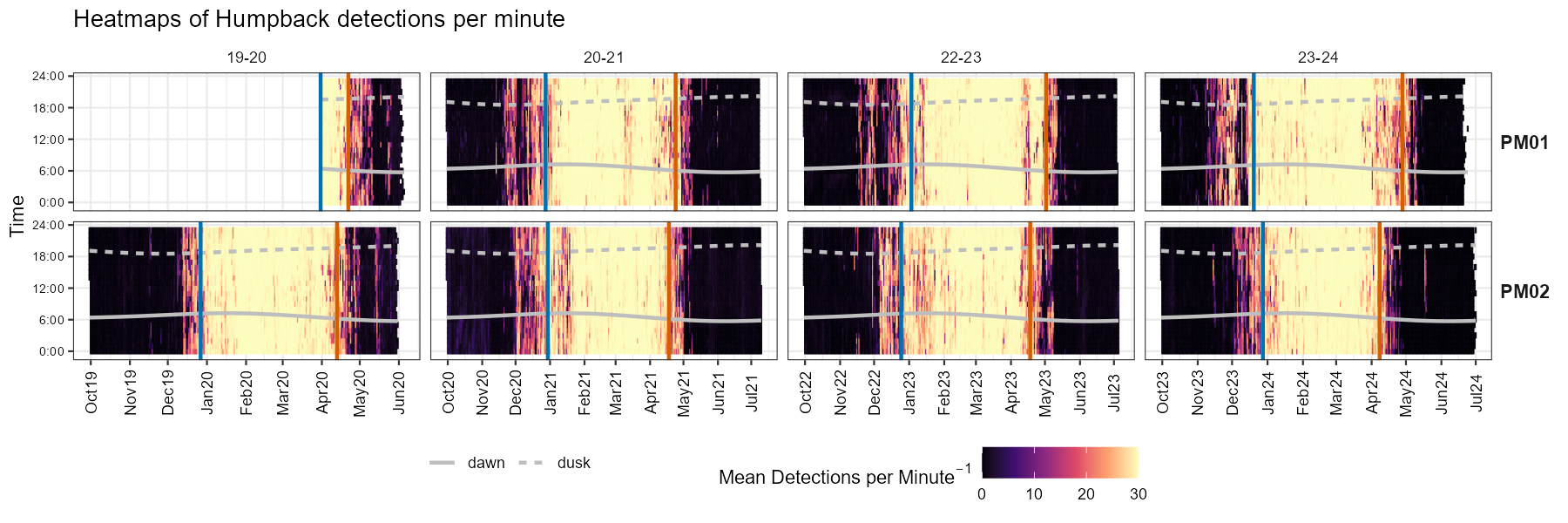
Heatmaps showing humpback whale detections per minute at two sites (PM01 and PM02) in Papahānaumokuākea National Marine Sanctuary across multiple humpback whale breeding seasons (2019–2020, 2020–2021, 2022–2023, 2023–2024). illustrating differences between sites and seasonal changes in whale acoustic activity over time.
Heatmaps show humpback whale detections per minute across each hour and day of the dataset, with date on the x-axis and time of day on the y-axis. Color represents detection rate. The gray solid and dashed lines mark times of dawn and dusk. The blue line marks when humpback vocalizations reach 75% of their maximum, and the orange line marks when they fall below 75%. These thresholds define an analysis window (hereafter referred to as “humpback season” in subsequent plots), rather than true seasonal boundaries. Fish and vessel activity were not calculated during this period due to likely masking effects from humpback whale chorusing. Credit: Conservation Metrics

When do fish contribute to the soundscape?

Patterns in fish activity, including both sound production and behaviors like grazing, help identify key biological periods and offer insight into the health and function of coral reef ecosystems. The machine learning classification model developed by Conservation Metrics grouped fish sounds into seven aggregate classes, including grazing. The following analyses use these classifications to examine patterns in fish activity across sites and seasons.

Parrotfish grazing detections represent feeding-related behavior that plays an important role in reef ecosystem processes. Here, we examine how grazing activity varies across sites, months, and years.
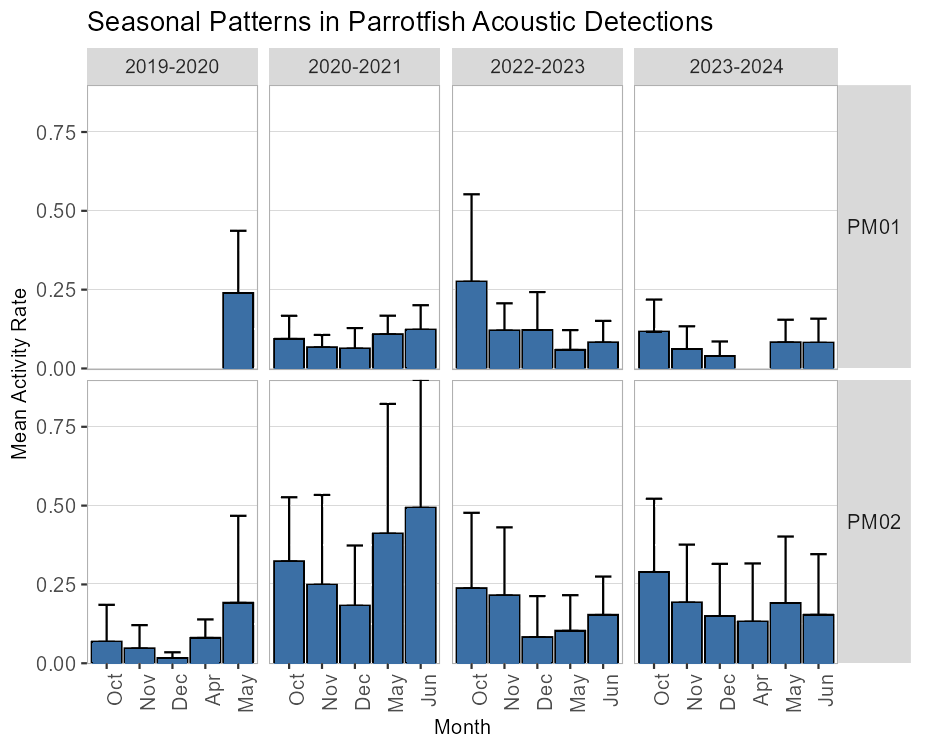
Bar charts showing mean parrotfish grazing detections per minute at two sites (PM01 and PM02) in Papahānaumokuākea National Marine Sanctuary across multiple years (2019–2020, 2020–2021, 2022–2023, 2023–2024). The charts illustrate differences between sites and seasonal variation in activity by month.
Mean detections per minute are shown by year, site, and month. Month is on the x-axis (grouped by year) and average detections per minute on the y-axis (grouped by site). The gray solid and dashed lines mark times of dawn and dusk. All data within peak humpback season were removed, and months with fewer than 15 days of data were excluded. Credit: Conservation Metrics

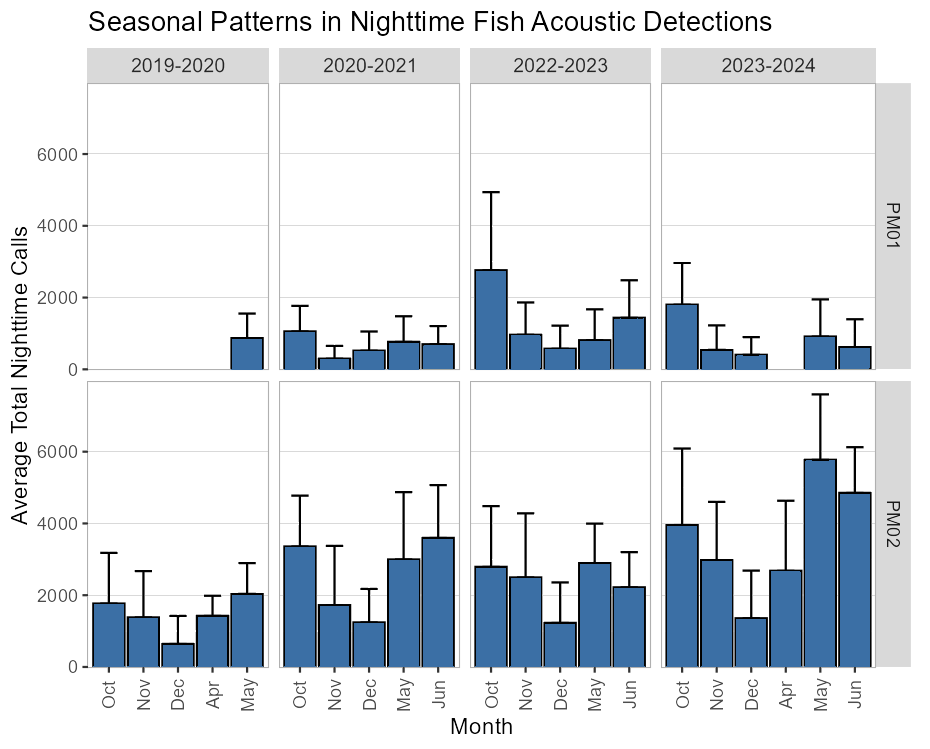
We also present a metric of nighttime activity, calculated as the sum of total calls from any aggregate class each night. This metric is motivated by literature showing that some species of fish and coral larvae settle at night and that reef soundscapes can influence settlement. It provides baseline information on nighttime acoustic patterns, without implying direct links to settlement.

Bar plot showing total nighttime acoustic activity by month and year for two sites, PM01 and PM02. Each panel represents a year, 2019–2020, 2020–2021, 2022–2023, 2023–2024, and bars are colored by month from October to June. Nighttime activity is higher at PM02 than PM01, with seasonal variation across months and years.
Nighttime activity was averaged by season and month. Nighttime was defined as 30 minutes before sunset to 30 minutes after sunrise for each day, based on local sunrise and sunset times. All hours of nighttime data were included except during humpback season, and months with fewer than 15 nights of data outside of humpback season were excluded. Month is on the x-axis (grouped by year), average nighttime activity is on the y-axis (grouped by site), and color represents month. The gray solid and dashed lines mark times of dawn and dusk. Credit: Conservation Metrics