The Northeast Fisheries Science Center (NEFSC) Passive Acoustics Branch (PAB) uses passive acoustic monitoring tools to study marine mammals, fishes, and anthropogenic sounds and provide important information for conservation and animal behavior. NEFSC PAB researchers work closely with regional partners, including Stellwagen Bank National Marine Sanctuary, to sample acoustic environments throughout Northeast Atlantic coastal and offshore areas. Multiple long-term monitoring sites have been established with specific goals to evaluate presence of data-deficient marine mammal and fish species and assess potential impacts of offshore marine energy developments.
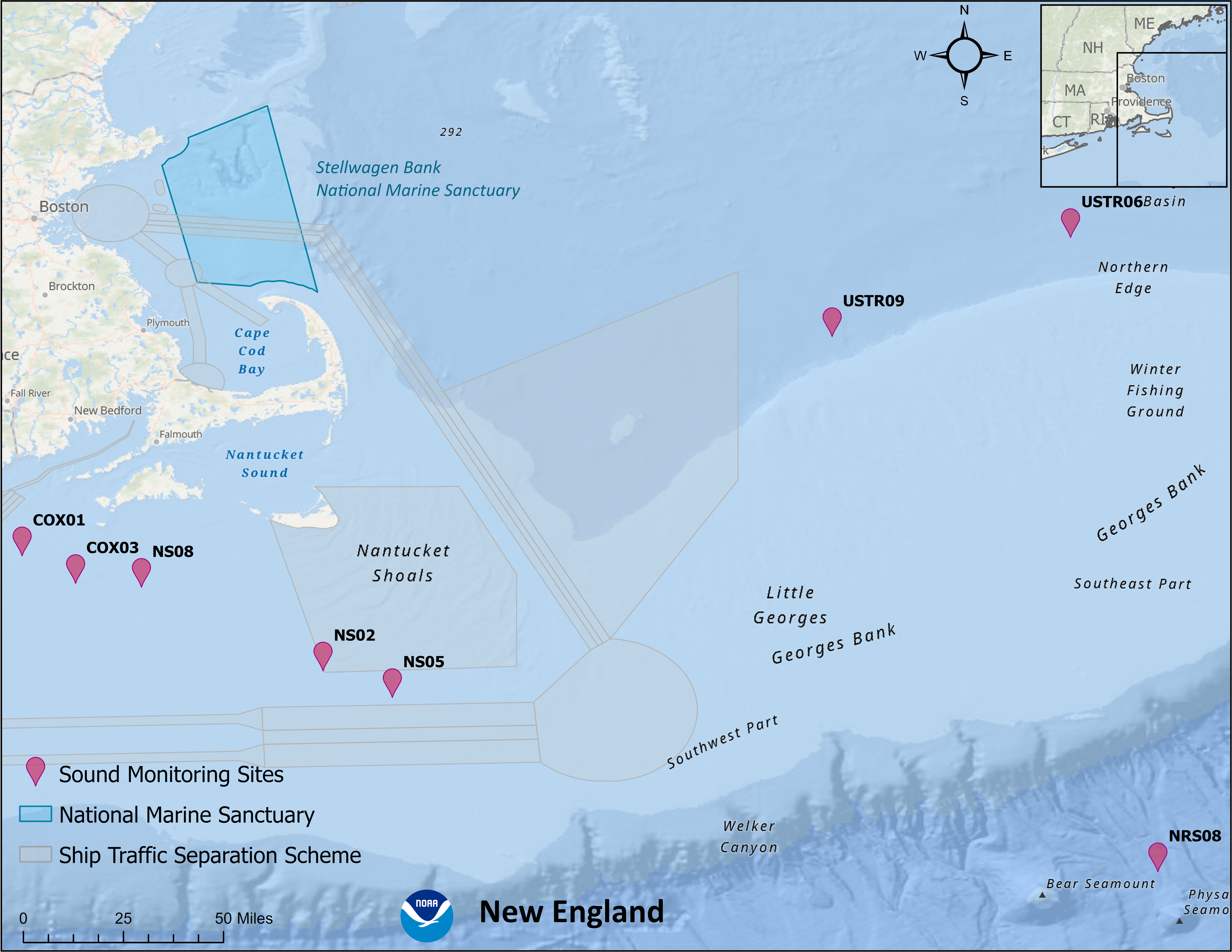
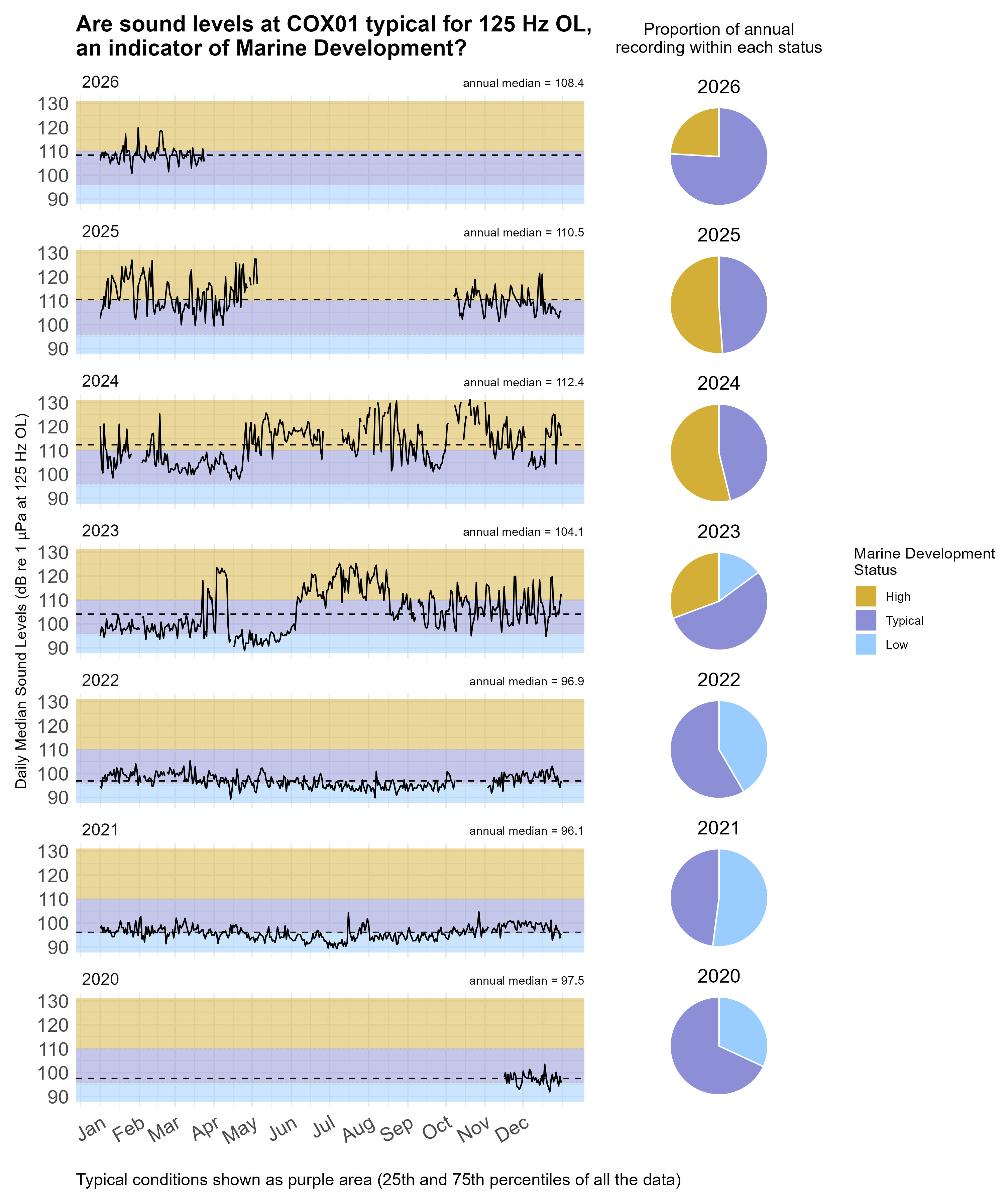
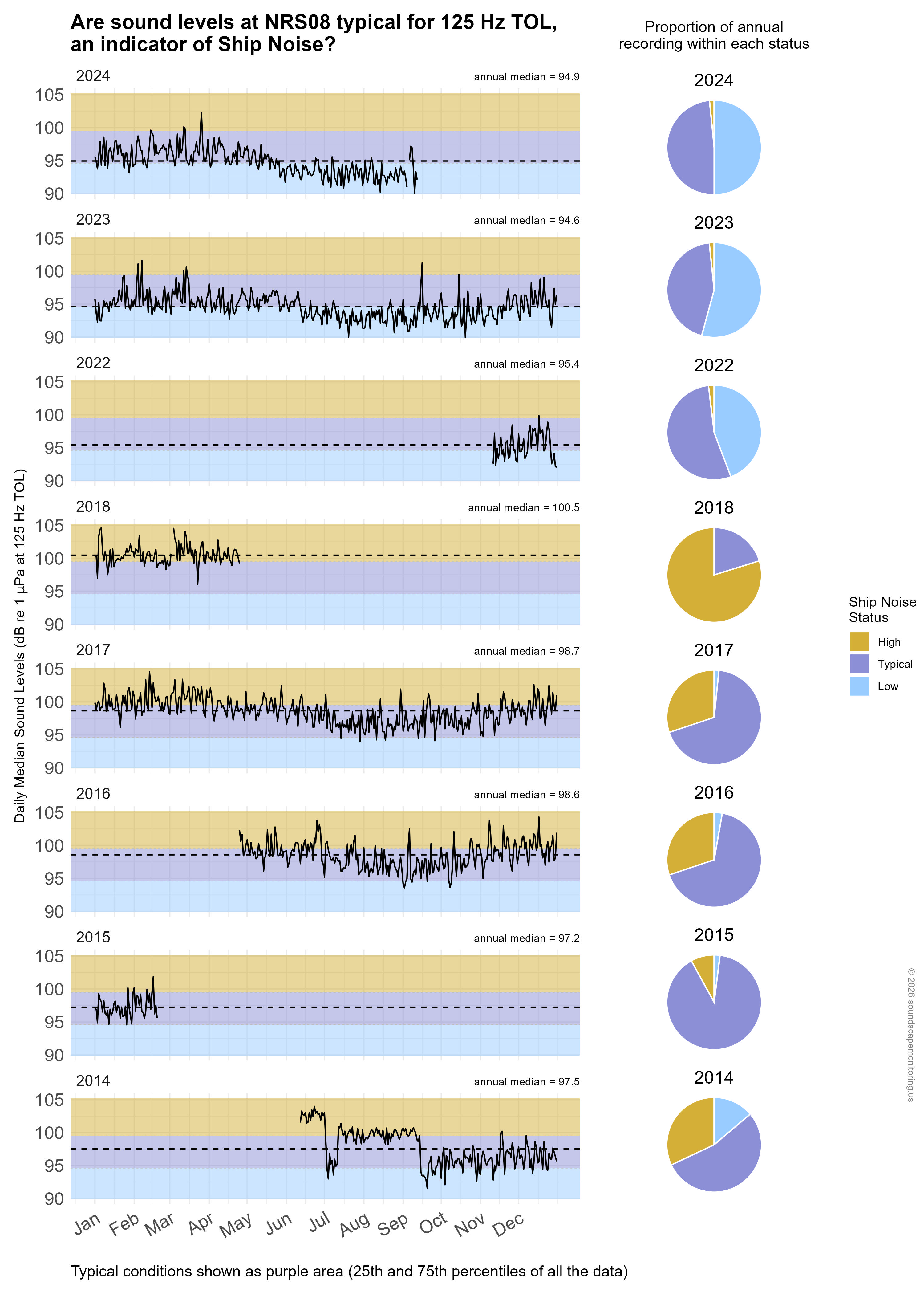
Current NEFSC ocean sound monitoring and analysis is maintained throughout the Northeast Atlantic region, and eight of those sites are featured here. An offshore site (NRS08) is part of the U.S. Ocean Noise Reference Station Network and was established in 2014 to monitor long-term trends in low-frequency ocean noise, particularly from baleen whale species presence and commercial shipping traffic moving to and from mid-Atlantic and New England ports. Two monitoring sites located on Cox Ledge (COX01, COX03) are maintained to support Atlantic cod monitoring and to assess potential impacts of offshore wind energy development in the Southern New England area. Nearby, three Nantucket Shoals monitoring stations (NS02, NS05, NS08) expand spatial coverage for energy development monitoring and provide information about baleen whale presence, particularly North Atlantic Right Whales. To the north, two sites in the Gulf of Maine (USTR06, USTR09) have been maintained since 2022 to provide information about baleen whale presence in a previously understudied area. The Gulf of Maine is an important seasonal feeding ground for many species of endangered and protected species.
Current NEFSC ocean sound monitoring and analysis is maintained throughout the Northeast Atlantic region, and eight of those sites are featured here. An offshore site (NRS08) is part of the U.S. Ocean Noise Reference Station Network and was established in 2014 to monitor long-term trends in low-frequency ocean noise, particularly from baleen whale species presence and commercial shipping traffic moving to and from mid-Atlantic and New England ports. Two monitoring sites located on Cox Ledge (COX01, COX03) are maintained to support Atlantic cod monitoring and to assess potential impacts of offshore wind energy development in the Southern New England area. Nearby, three Nantucket Shoals monitoring stations (NS02, NS05, NS08) expand spatial coverage for energy development monitoring and provide information about baleen whale presence, particularly North Atlantic Right Whales. To the north, two sites in the Gulf of Maine (USTR06, USTR09) have been maintained since 2022 to provide information about baleen whale presence in a previously understudied area. The Gulf of Maine is an important seasonal feeding ground for many species of endangered and protected species.